
Sola Scriptura
Book Review
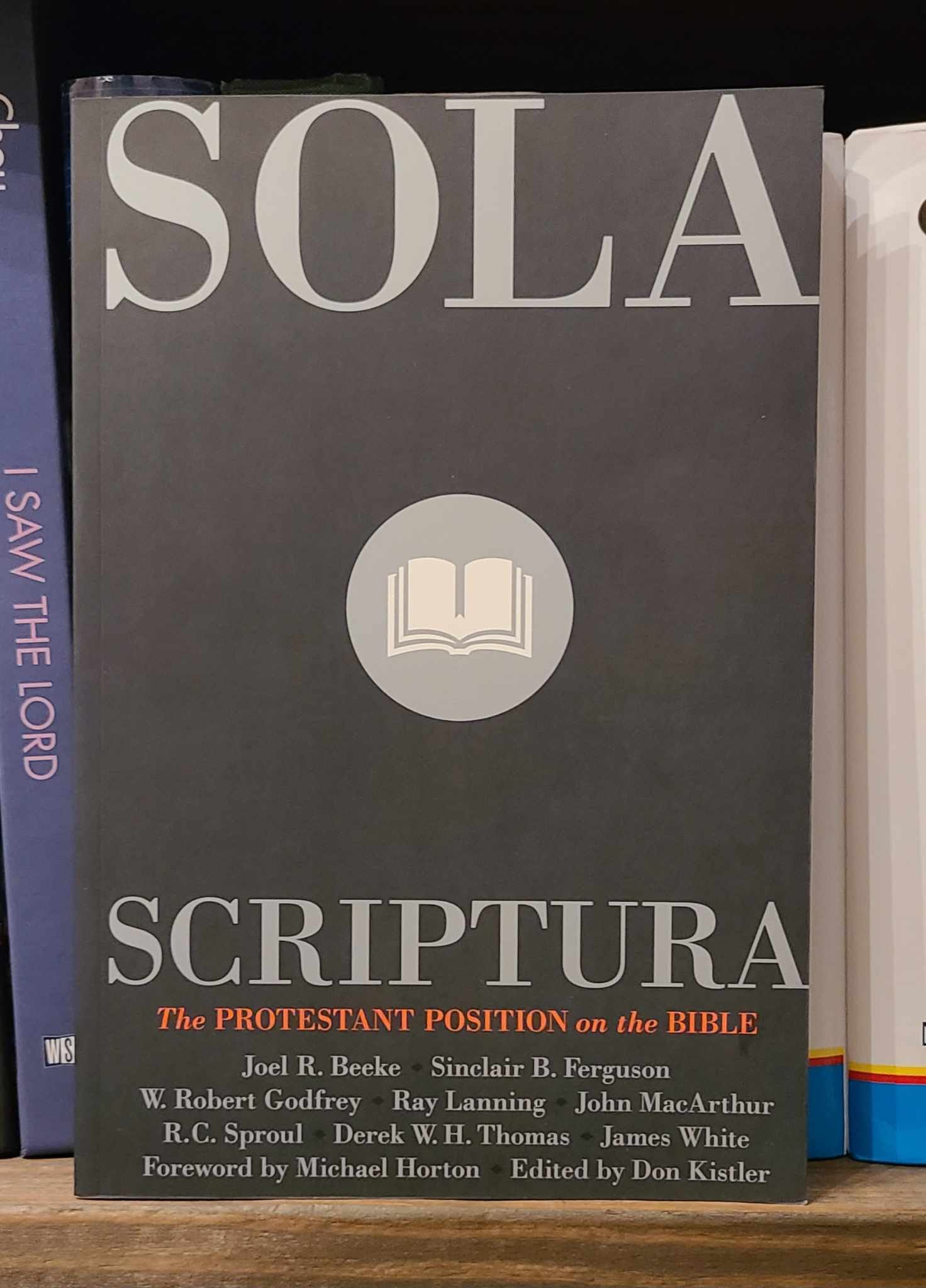
Beeke, Joel R., Sinclair B. Ferguson, W. Robert Godfrey, Ray Lanning, John MacArthur, R.C. Sproul, Derek W. H. Thomas, and James White. Sola Scriptura: The Protestant Position on the Bible. Edited by Don Kistler. Third. Ann Arbor: Ligonier Ministries, 2009.
The formation of Sola Scriptura is a collection of essays written by many prominent theologians, whose purpose is to explain a basic understanding of what differentiates the Protestant from the Roman Catholic. Unlike other books I have read that are built like this, where each essay is written from each author's interest, it is evident that each essay builds on the other. This doesn't take away from the individual passion of each author to write about something they may or may not care about, but that there is a systematic building from one essay to another. What we end up reading is a closely congruent train of thought that maintains the overall narrative and highlights the importance of the term, “Sola Scriptura.”
This basic topic is just as important today as it was during the reformation and is becoming an often said, but misunderstood term. With many churches departing from formal teachings of church history and confessions and the increasing rise of social media influencers who attack a position based on worldly perspective or argue through a straw man or equivocation fallacy, it can be difficult to refute, defend, or believe in an important tenant of the Protestant faith. Therefore, the authors provide a cursory understanding of the terminology and history related to the church.
In particular, James White’s and Sinclair Ferguson’s chapters provided a lot of meat to understand the opposition, which historically is identified as the Roman Catholic Church, and the understanding how they came to the understanding they possess. Other chapters continue to show the tension of authority placed on Scripture with others who are looking beyond Scripture for consistency and understanding, of which it is noted that conflict tends to become the result more than harmony. This book is not just an academic textbook of hermeneutics and history lessons, but Beeke’s and Lanning’s chapter expounds on the transformational effects and provides a call to action for the faith.
Depending on the level of one’s knowledge and intimacy with different categories of theology and ecclesiology will affect the use of this book. If one is well-versed in church history and systematic theology, one is less likely to find use unless one finds new means of logic or reason against certain claims. If one is well-versed Biblically, such as most pastors, then this book can assist in providing bullet points against those who are concerned about the differences between Protestants and Catholics. For those who have no intimate knowledge of the subject, I would say that this book is of great use, but sometimes the language may be overly academic through the use of Greek and Latin phrases. Of course, I do not mean it is beyond one’s grasp, but there may be sentences here and there that will sound like gibberish.