
A Unique Experience
Personal Story About Preaching and Medical Emergencies.
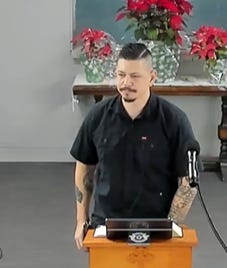
Something that nobody prepares you for, especially in seminary, is what to do during a medical emergency during a sermon. Just recently, I was given the opportunity to preach at a local, rural church, which I have had the opportunity to do several times now. Normally, at this church, I prepare to assist with technical issues regarding their audio/visual equipment or their streaming capabilities, and this service, we showed up early to help with those. Excessive audio feedback or weird reverb issues are what I have been prepared for. But this week, I had a congregant become unresponsive during the service.
What is funny is that this isn’t my first time being in a service with a medical issue. Normally, the medical issue occurs, and deacons/staff and people respond to the problem and get the individual to care without the preacher ever noticing. However, in our context this time, this church wasn’t large enough to have an issue be invisible from the pulpit. As I was “ramping” up into the meat of the sermon, I started to see people shifting from their seats to respond. When I heard the words, “Is she responding?” I felt that I could not continue.
What do you do from the pulpit? What would you do? In a smaller church, it is impossible to “power” through it. Also, I didn’t want to do that because I was concerned for this individual. At this moment, let me tell you that she is alright. Paramedics came, assessed her vitals, and took her to the hospital for further evaluation. But before the paramedics arrived, and as she looked to be responding better, what do you do as the preacher? We prayed, had some impromptu singing, and prayed some more. But at some point, we could not just simply stand around and wait, particularly as she was becoming more responsive. So I made the decision to continue to preach. To feed the flock.
Whether this was the right action or not, I’m still unsure. Especially as I’m preaching over the sound of paramedics chatting and stretchers being raised and lowered. The congregation shifted their eyes between me and the woman in the back. I would make a powerful point with eyes on me, and then as I used a preposition, the heads would turn towards the louder noises. What I found most humorous were the few people who seemed to be completely locked in to me only. As if they were oblivious to anything happening four seats from them. I partially think this was the case because it was better to listen to me than the woman vomiting in the back. I mean, I definitely preached louder so that I could drown out the noise for myself, as I am a sympathetic puker.
With the amount of activity that was happening in the background, I could definitely feel that I was rattled. The sermon that I had crafted did not come to me as smoothly as I had previously rehearsed, but it seems that the Spirit kept me coherent and on track. Probably about half of my sermon was conducted with EMTs working in the background, and it wasn’t until the concluding remarks that everything in the church became unusually quiet.
At that point, it felt like my sermon felt more real. Here’s something that I didn’t tell you yet. My sermon was titled, “Now You Are Permitting Me to Depart,” based on the text of Luke 2:25-35. These words were plastered on the screens to the side of me, as the medical emergency that was occurring in the back was an elderly woman becoming unresponsive. I was preaching a sermon about being ready to die. Before I could get to the part about not wanting anyone to die now, a congregant felt it necessary to test her readiness to die. And then after she was revived, I continued to preach about being ready to die to the point of even saying that the application of the message is that we’re ready to die.
On reflection, I still don’t know if I did the right thing. It felt needed. To feed the flock. It put closure to the service with intentionality instead of doubt and confusion. At the end of service, I took up the customary position to shake everyone’s hands out the door. I’m not sure if the feedback was just pleasantries because of a difficult event, saying things such as “that was wonderful,” and “very informative.” But I do recall two of the older ladies, one with tears in her eyes that may or may not be related to my message, telling me how “wonderful” and “timely” that message was. It’s a mixed bag of emotions. All of this is humorous, but I feel like I’ve been compassionately traumatized as well.
Would I respond in the same way if it were to happen again? Probably. I hope to never have to experience this again. Looking back at all of this, it was humorous, but at least, let me finish the sermon. You may have realized that I wasn’t delivering you a command, but was saying it more rhetorically. But I am happy to say that she is doing well and that she was surrounded by friends and family at this moment rather than being alone, where who knows what could have happened. In a way, I wouldn’t mind going during a service, but I’ll do my best to do it during the benediction. Lastly, if you’re curious what a rattled preacher looks like (I don’t pace this much), here’s the link:
Time Stamps:
26:00 (Start of the sermon).
44:22 (You’ll see me look to the left side of the screen often).
57:03 (I try to start preaching again with EMT arrival).
1:16:00 (EMTs leave and everything goes silent).